Most farmland changes hands with a soil map and a guess. This land comes with a story: more than twenty years of continuous organic management, two orchards planted by the family's own children, and the back acreage used for years as organic seed-breeding research plots.
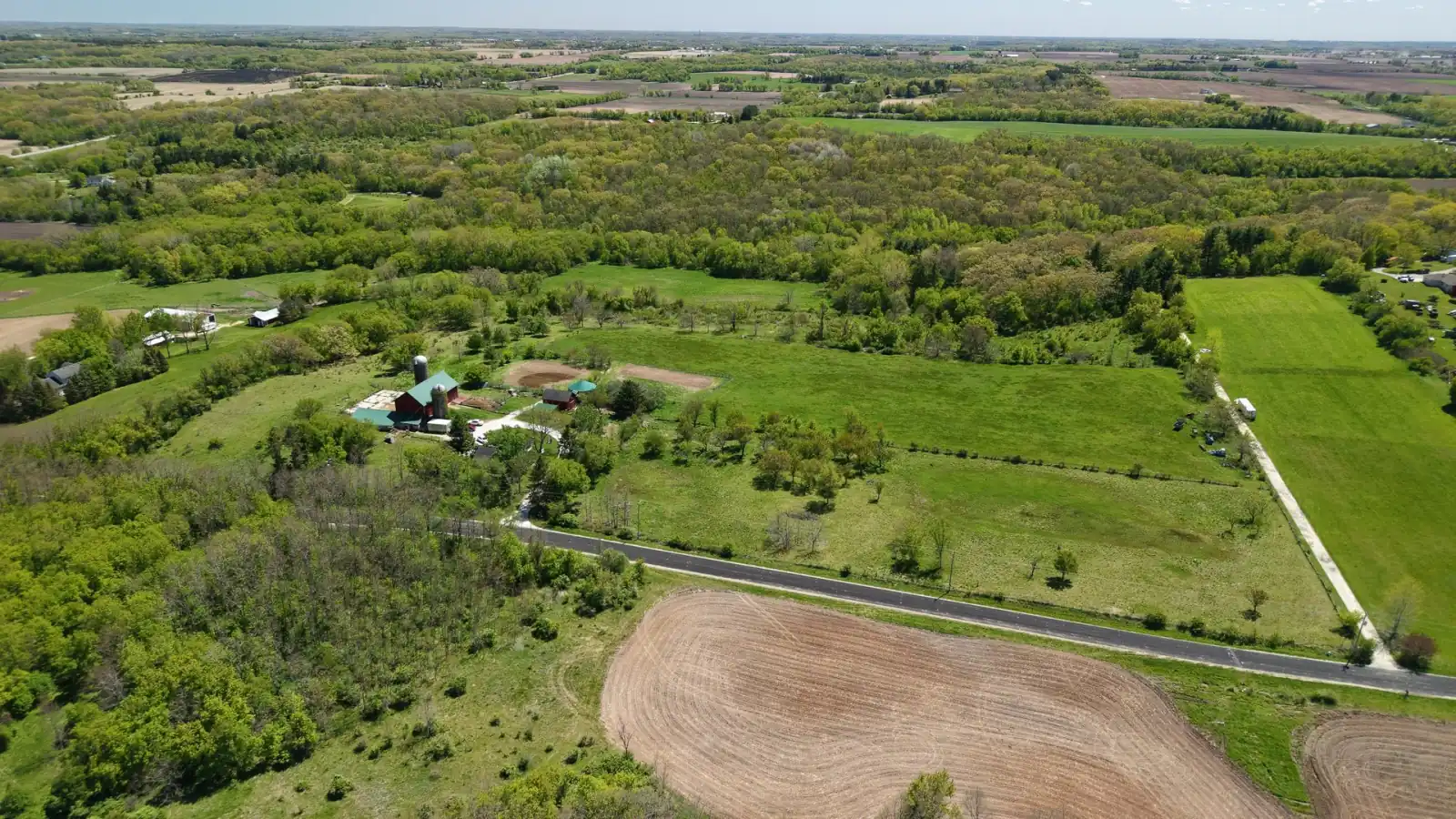
The Goldstein Farm is 35.03 acres in the Town of Spring Prairie, Walworth County, Wisconsin. The family has owned and worked it since 1992. What follows is a walk across the land itself: what is growing, how it has been managed, and what a new owner inherits.
Two decades of organic stewardship
The family has managed the farm organically for more than twenty years. That history matters beyond the label. Years of organic practice mean years of building soil rather than drawing it down, and the January 2025 certified appraisal specifically credited the farm's organic history with a 5 to 10 percent value premium.
The organic history described here is the family's management practice over two decades. Buyers who plan to sell under a certified organic label should talk with a USDA-accredited certifier about what records and inspections a new operation would need.
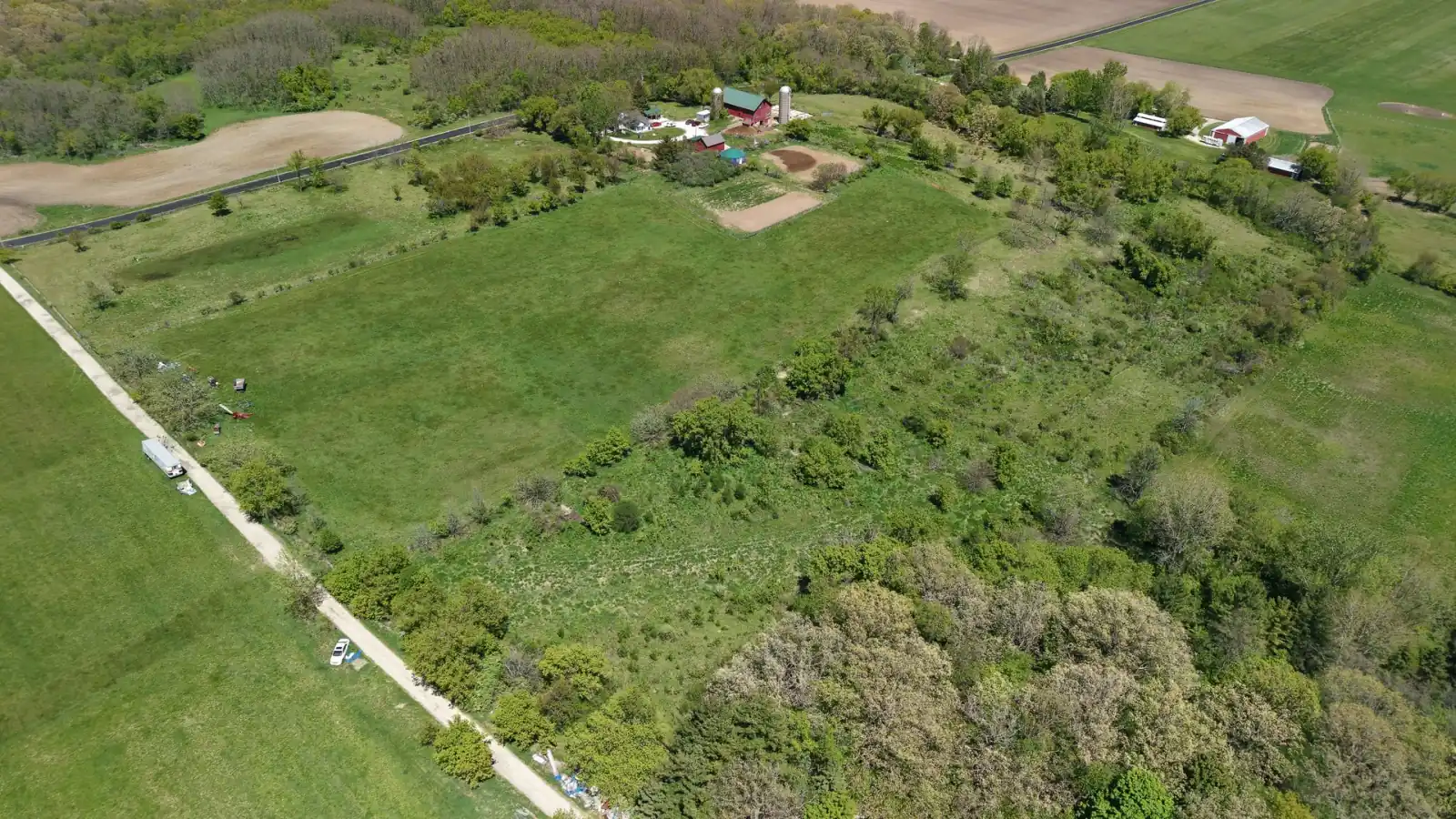
The research plots on the back acreage
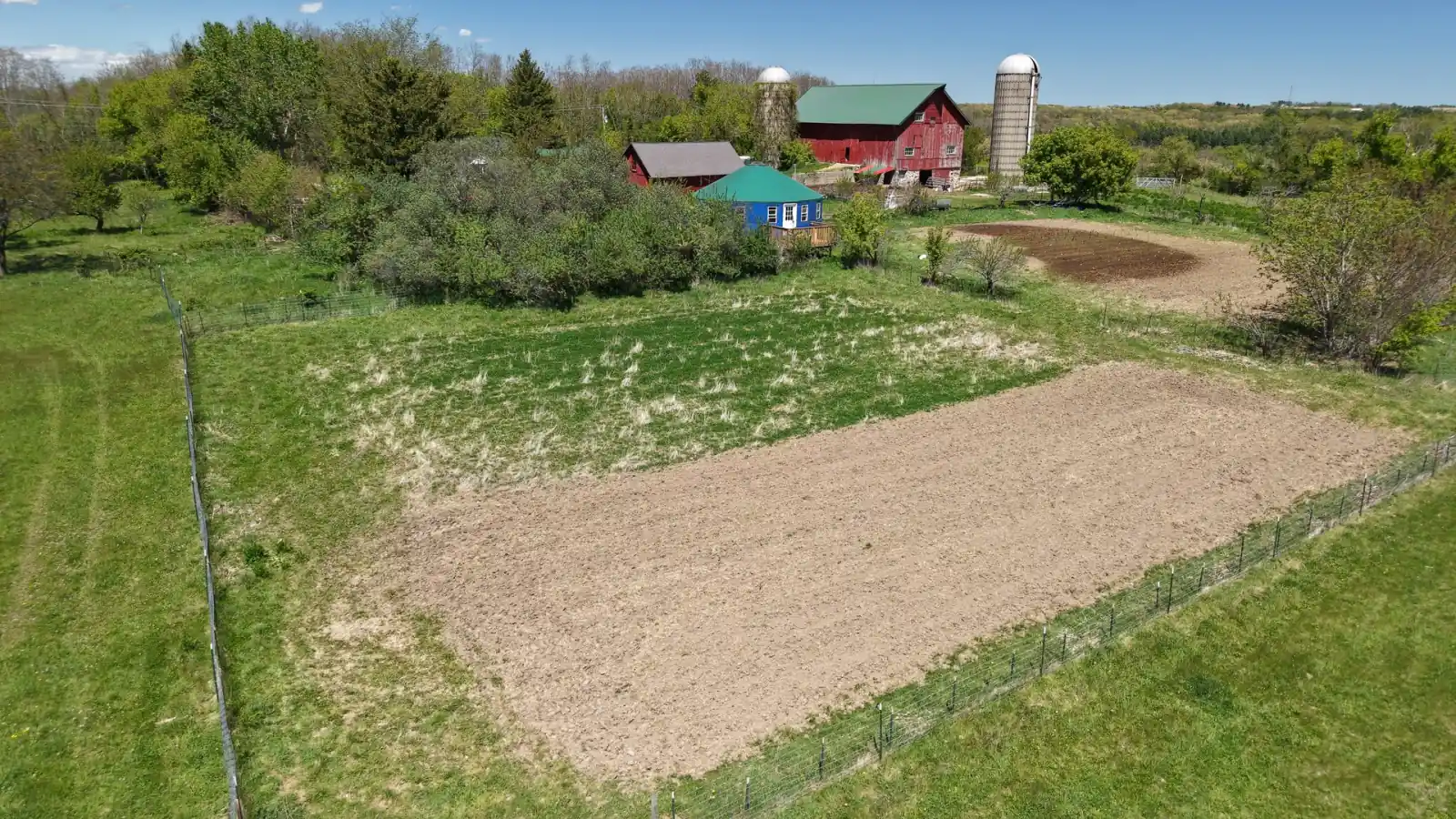
For more than twenty years the family rented part of the back acreage to Walter Goldstein's Mandaamin Institute, a nonprofit doing organic seed-breeding research. The trial work was careful and long-running, and it is still in the soil. It is also part of why the farm is known in Midwestern organic and seed-trial circles. The family notes that a similar research-plot arrangement may be available to a new owner; any lease would be a separate agreement to discuss directly.
The two orchards
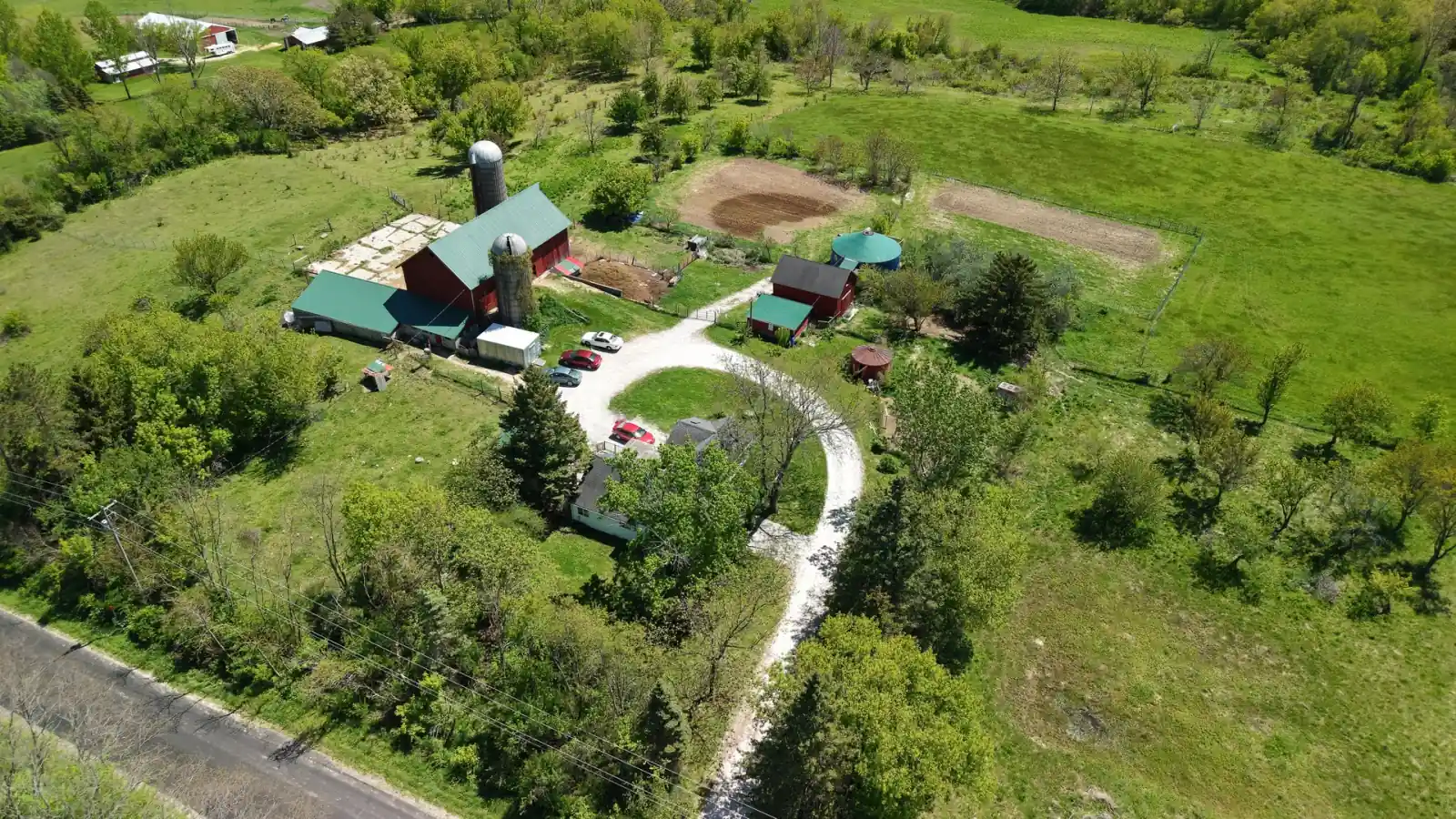
When the family arrived in 1992 the children dug fence posts and planted the orchards by hand. Today there are two established orchards, fruit trees in tidy rows with mature root systems and producing seasons. The circular gravel drive curves through orchard trees on its way to the house, so the first thing a visitor sees in spring is blossom.
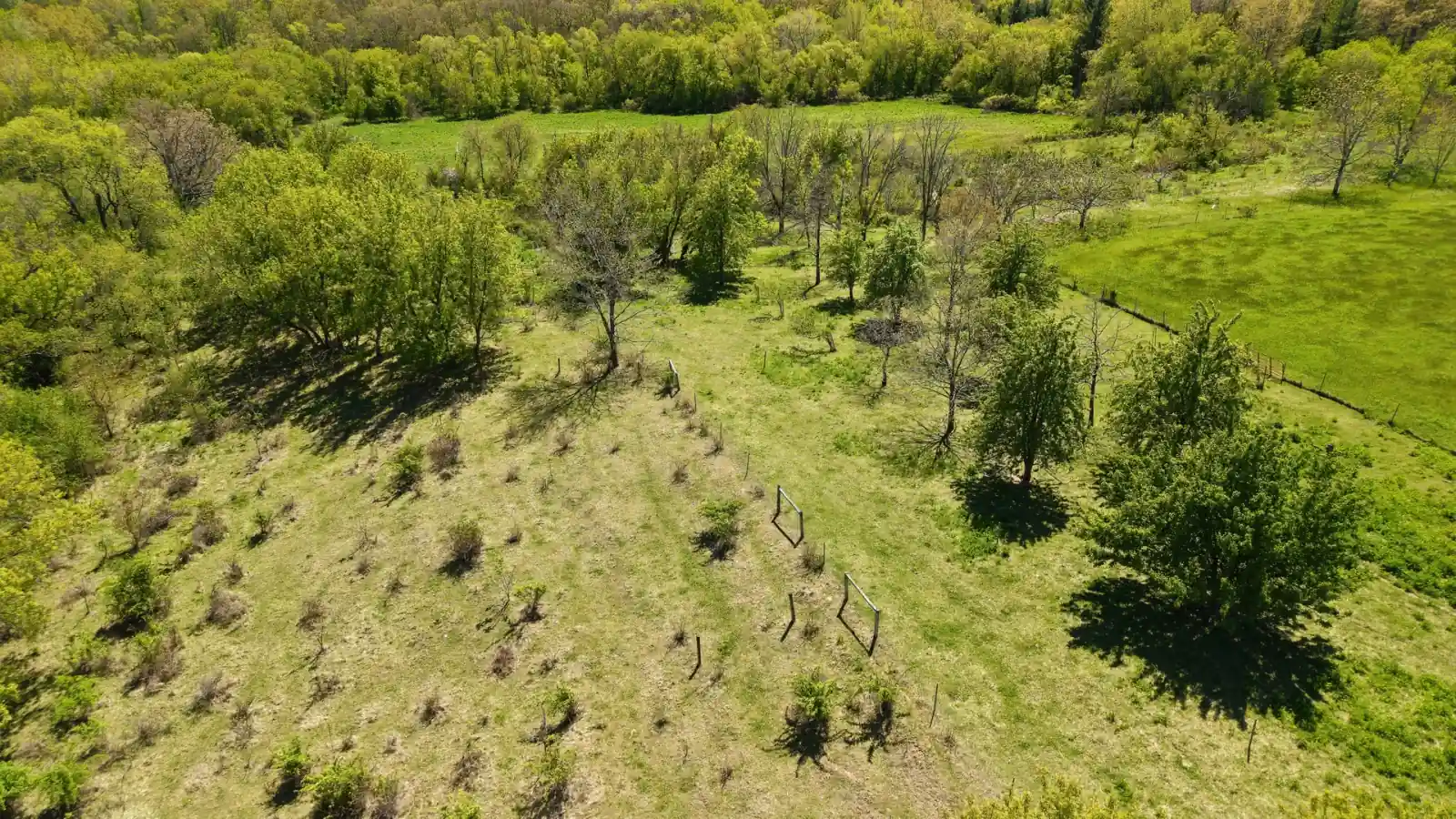
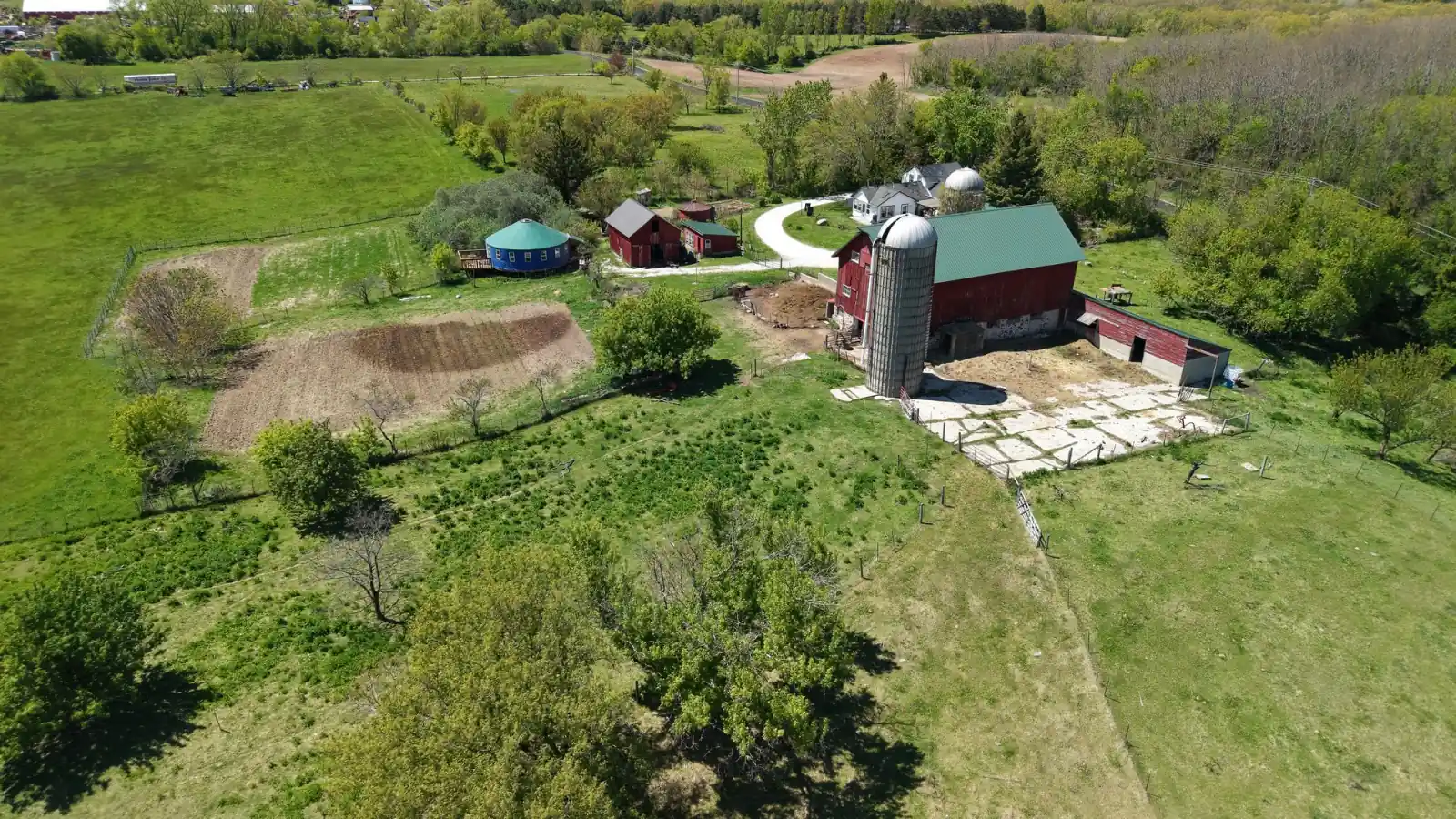
Next to the orchards are garden beds for vegetables and flowers. The drone photos from May 2026 show several worked plots near the barn and yurt, freshly turned for the season.
Pasture, hay and edge habitat
Much of the A-2 portion of the farm is open pasture and hay ground that runs back from the farmstead in long, gently rolling fields. Over the years the farm has produced organic hay and fruit and has carried sheep, chickens, a milk cow, hogs and other animals. The land is generally level with adequate drainage, according to the appraisal.
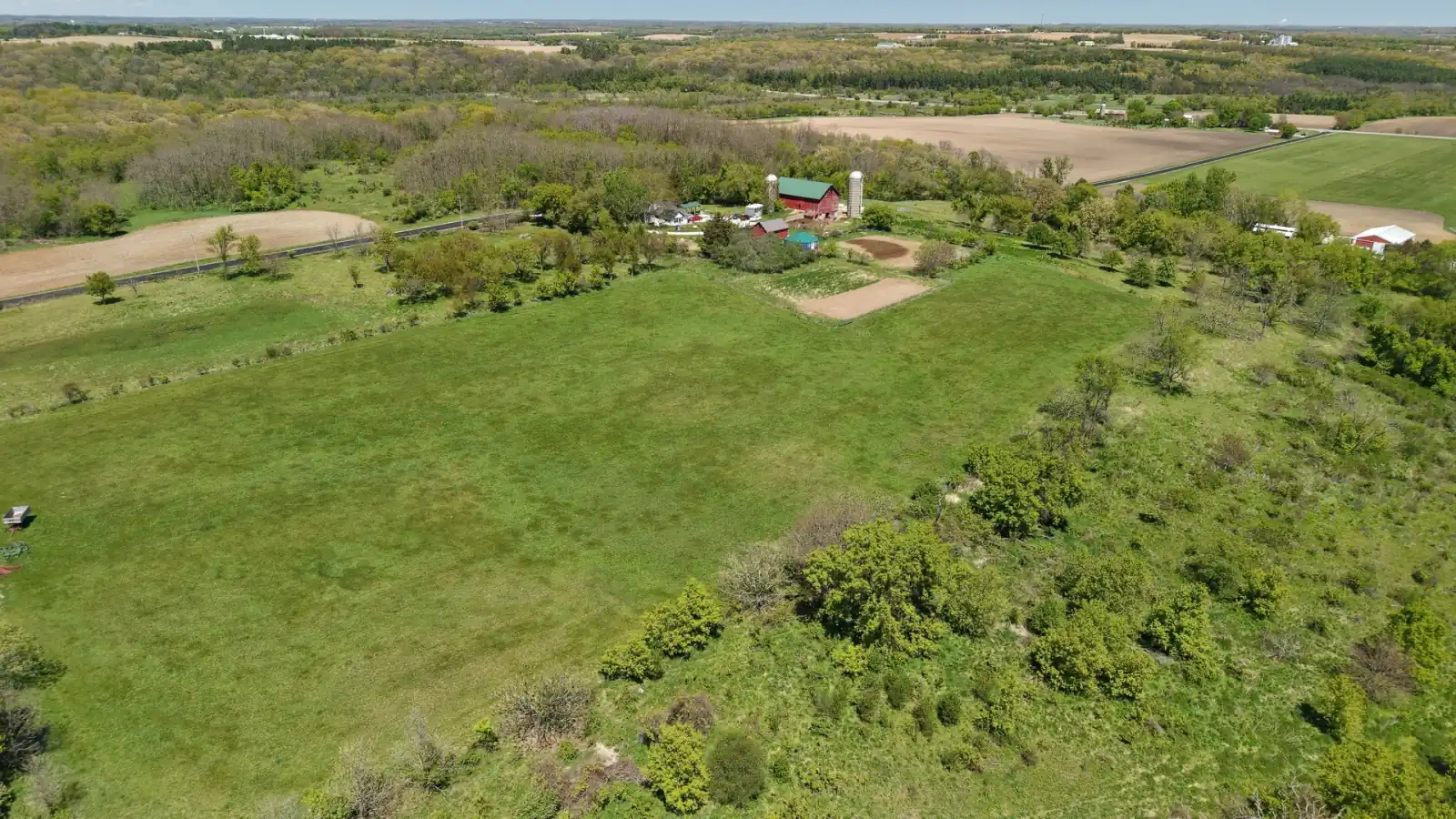
The edges are wooded. Mature hardwoods and brushy edge habitat wrap the property, and the 5.7 acres zoned C-2 cover the upland, more wooded part of the parcel. That mix of open ground and woods is good for birds and wildlife and gives the farm its sense of privacy: no close neighbors are visible from the house.
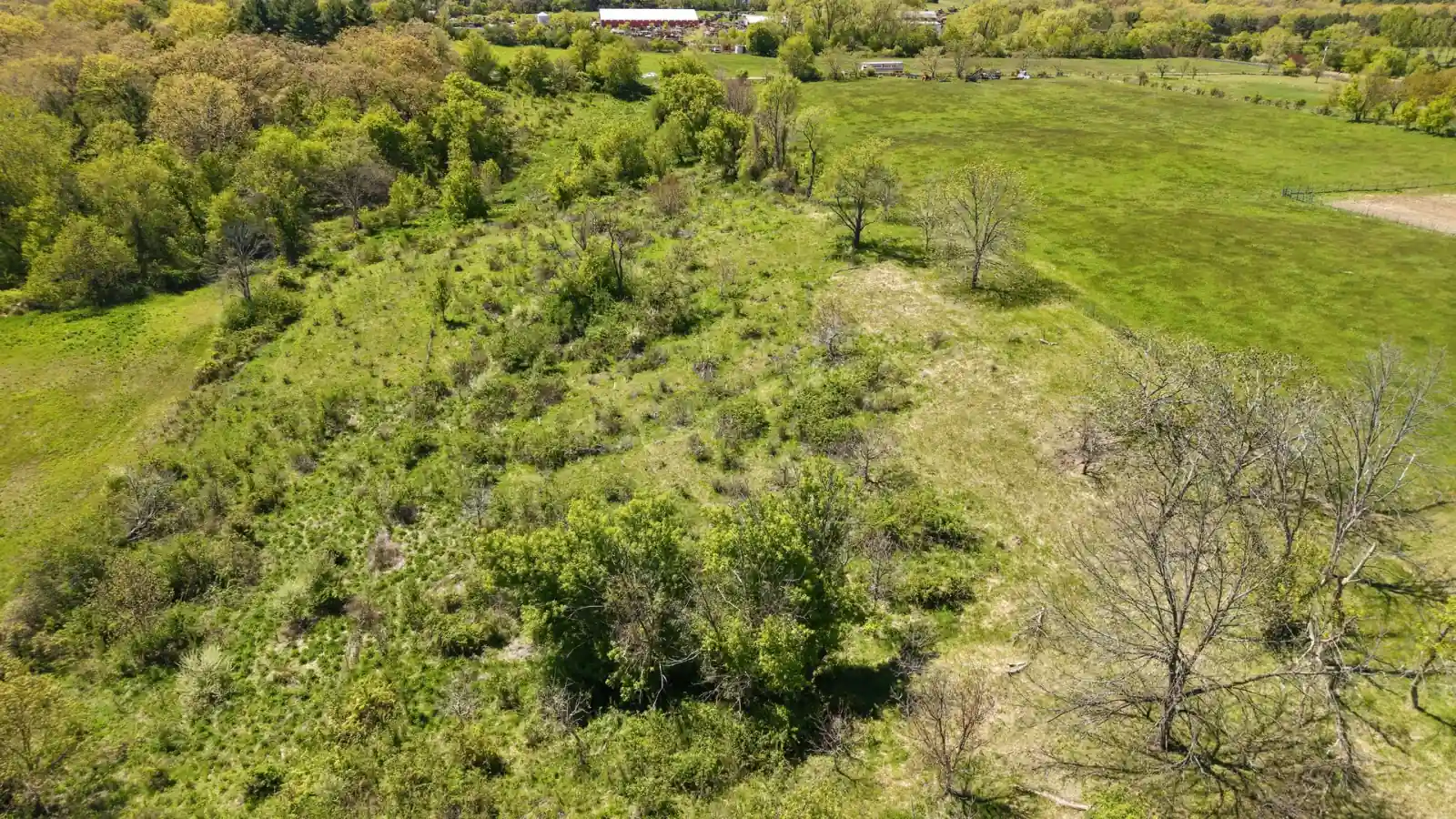
Watch the land from above
The farmstead that supports it
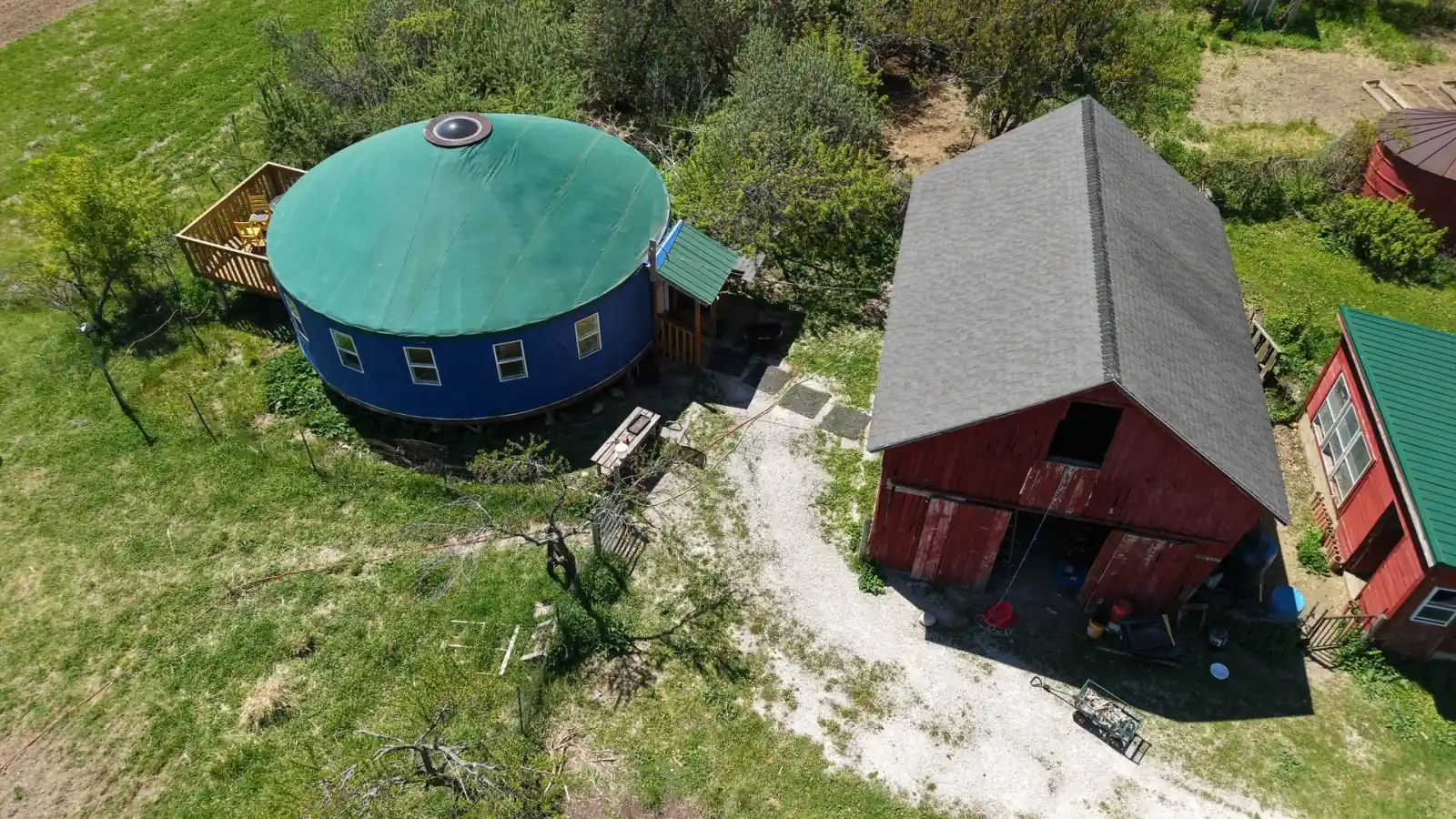
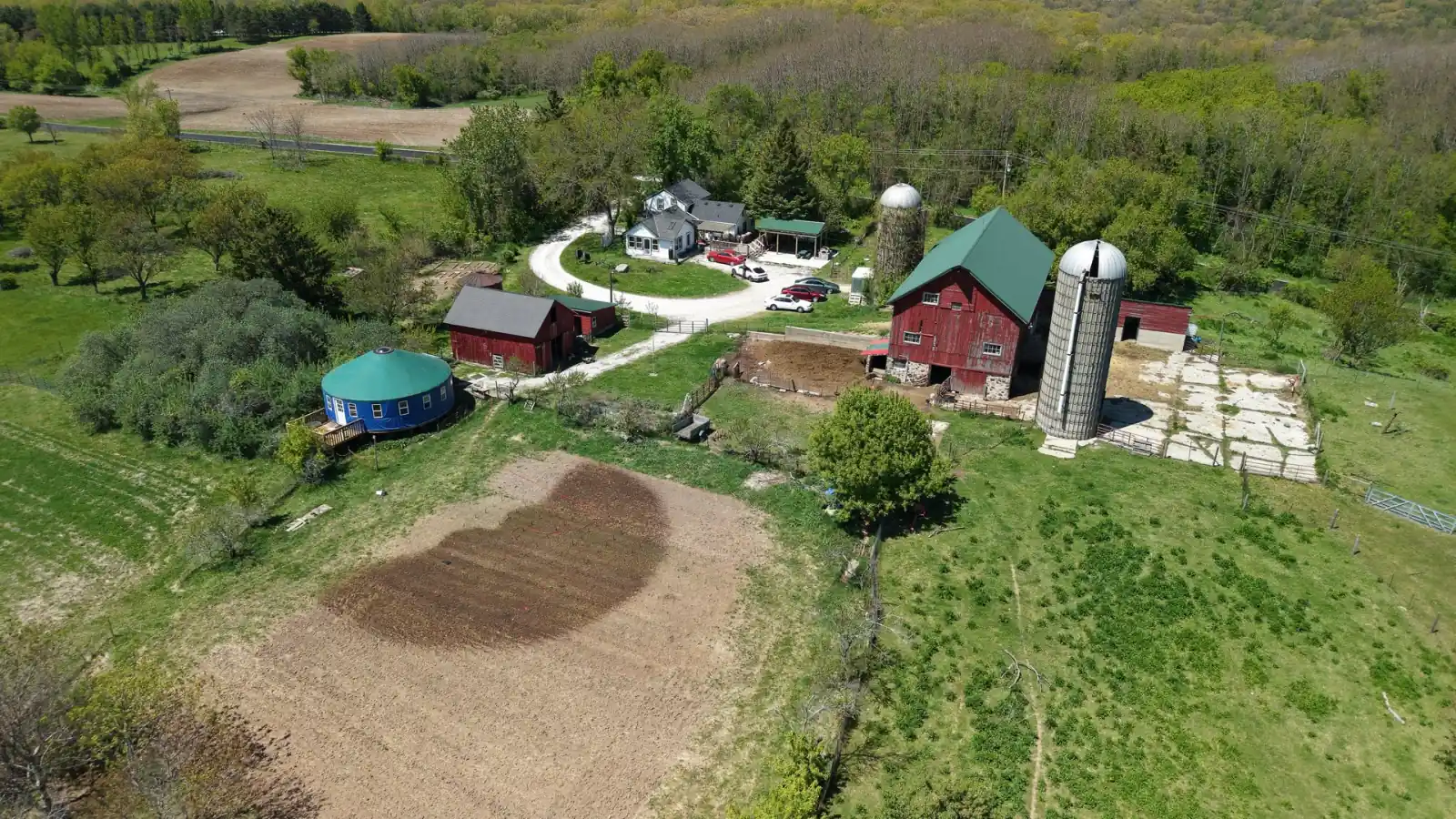
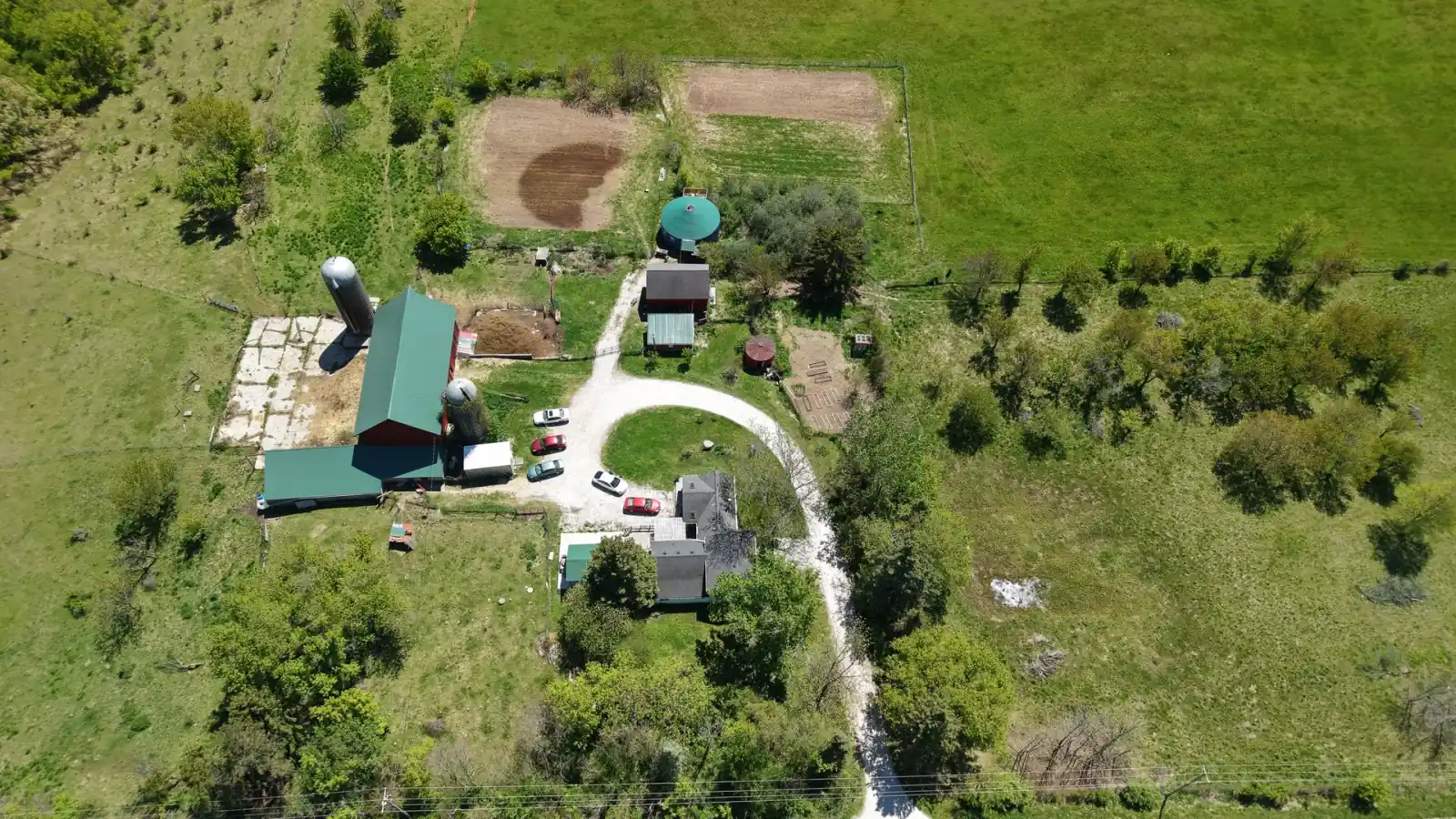
A working farm needs working buildings. The center of the property holds a timber-frame red barn with a green steel roof, the original silo, a smaller animal barn, an equipment shed, a dome-roof grain bin and storage sheds, all in working order. Utilities include electric service, a private well, septic and LP gas. The newly built four-season heated yurt sits under the trees near the barn.
Who this land suits
This is not a blank parcel. It suits a buyer who wants to keep growing: a market gardener, an orchardist, a small grazing operation, a family who wants their kids to have chores, or an educator who wants to keep the farm-school tradition alive. The A-2 district permits all agricultural uses (see the zoning page), and the existing conditional use permits add lodging and education on top.
Bente Goldstein's Farmwise program taught biodynamic growing, animal husbandry and how to read a season here for more than twenty years. The soil has been part of that classroom the whole time.
See the full photo gallery and FAQ, read the area guide, or go back to the main page.